
בס״ד
Books Available for Purchase Here
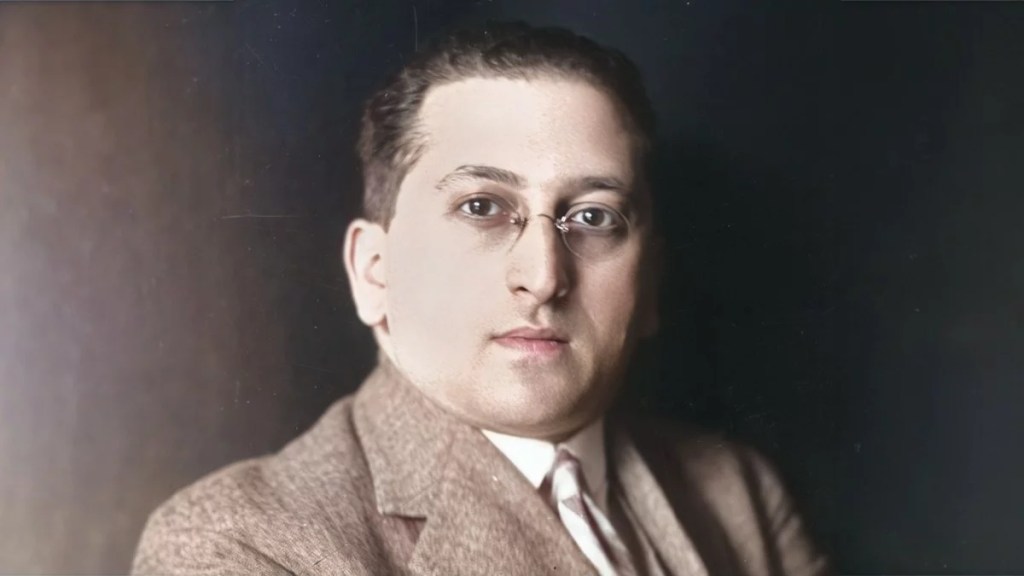
The following passages were written in a 1947 book titled, “The Jew,” by David Hadler, the pseudonym of a Jewish Holocaust survivor – Ferdynand Zweig. The book opens with this dedication to his teenage daughter who was murdered in the Holocaust,
“To my daughter
Dziunia Irena
Born in Krakow, 1925
Deported from Besancon, 1942
Who still lives on in these pages”
“I have little theological knowledge and it is not my intention to raise highly controversial and speculative theological subjects. But it has always struck me as an ordinary reader of the Bible (and I have read the Old and the New Testaments with great avidity from my early youth) that the picture of Jesus in the Synoptic Gospels is a perfect symbol of Jewish fate throughout the ages.
… Despair reigned among the Jews. “Why go on with the hopeless task beyond our powers, to serve as Light, or Servant, or Witness?” they may have asked themselves. “Let us shift the burden to shoulders better able to bear it. The religious mission of Judaism was concluded when Jesus was born and He will take the task of the Servant; He will be the spiritual symbol of Israel.”
Let us first glance at the external stylisation of Jesus as Israel, how He replaces the holiness and the ministry of Israel, and then let us see how Jesus’ fate reflects the fate of Israel. It may be again that being styled Israel, Jesus had to experience the fate of Israel, and since the pattern of Jewish fate before and in the Diaspora remains basically the same we can say that Jesus, as depicted in the Synoptic Gospels, is the perfect embodiment and symbol of the Jewish faith throughout the ages, and even more so now in a time of apocalyptic slaughter for millions of Jews in Europe; men, women and children who have been killed for nothing else but being Jews. Thus Jesus, who had so little influence on Jewish thought and action, is the central figure of our fate and destiny.
… Rabbi Akiba’s answer to his executioners and torturers: “I rejoice”, should be the answer of a whole nation which has won its greatest victory over the enemy. We must sanctify the colossal monument built up out of the blood, tears and sweat of millions of Jews in this war, and regard it as an inexhaustible reserve of spiritual energy and a treasure for the whole of mankind.
This monument cannot be regarded simply as a record of misfortune, as a record of just one of many human tragedies. Such experience must not be lost to the human conscience. It must remain and be deepened by meditation and art. It must help to strengthen the forces tending to Oneness. It is a new Gospel written by the blood of six million Jewish men, women and children, and by the tears of many more, and it tells a tale which should inspire the human mind as long as man survives on this globe. Unless its message is learnt by heart and becomes deeply ingrained in the mind of every young man and woman throughout the world, there is little hope of any lasting betterment of the human species.
It is a message written in language understandable to all men and it conveys the simple but powerful truth that the Jew rises from the dead, overcoming corruption and decay by his powers of creation. His resurrection is once more the triumph of life, the suppression of evil. The message of the slaughtered Jew to his fellow-men is “Arise, prosper and rejoice.” Rejoice whilst helping to create a new world which rises with you from the ashes of shattered homes.
In a way Jesus consummated all the universalistic forces in Jewish religion and life.
… Christianity and Judaism grew from the same Hebrew seed but both trees grew apart and in their ultimate shape they form distinct entities, animated by a different spirit and guided by different sets of values and ideas.
For instance, we could never accept the doctrine of the Trinity; it will always remain foreign to us and in contradiction to our belief in Oneness. Similarly, we could never accept the doctrine of Redemption because it contradicts our belief in personal atonement. We shall always lay stress on good works rather than on faith and on justice rather than on love; on faith with reason rather than on faith without reason. The Jew will never abandon the quest for justice; it is his basic preoccupation. He will try to combine the two most precious values: love and justice, and to walk with his two feet planted firmly on the road to salvation, rather than have one foot in each camp. The doctrinal body of Christianity and its projection of the Messiah into a certain definite historical era coinciding in time with the destruction of the second Temple and the beginning of our Dispersal is foreign to Jewish dreams which project the coming of the Messiah into the future, at the end of our historical strife and struggle. Our forefathers were right: The Messiah has not come. He is still to come, awaited eagerly by millions and millions of oppressed, persecuted, downtrodden and afflicted sons and daughters of man who must prepare the way for His coming.
Still there is much in the life of Jesus and in His teaching which really belongs to us and was meant primarily for us. Read the last Beatitudes with their powerful and musical language and tell me to whom they could have a greater meaning and whom they could better serve throughout the ages than the Jews. “Blessed are they which are persecuted for righteousness’ sake: for their’s is the kingdom of heaven. Blessed are ye, when men shall revile you, and persecute you, and shall say all manner of evil against you falsely, for my sake. Rejoice, and be exceeding glad : for great is your reward in heaven: for so persecuted they the prophets which were before you” (St. Matthew, v, I0, II, I2). These words are like healing balsam to our wounds. This is the true wisdom of our race coming from centuries of tribulations, preparing us for millennia of suffering. The Sermon on the Mount with its glorification of Israel, concerns us, serves us and was primarily meant for us: “Ye are the salt of the earth”-but remember “if the salt have lost his savour” it “is henceforth good for nothing”. “Ye are the light of the world”, but “let your light so shine before men, that they may see your good works” (St. Matthew v, 13, I4, 16).
The whole story of Jesus’ life is of the greatest value to the Jew in persona, in familia and in natione. His whole experience of torture, humiliation and death and its overcoming is our own experience, and no one can be more elevated by it than the Jew.
Has anyone expressed the vision and dream of Israel in a more masterly fashion? Has anyone ever spoken the words of love, mercy and hope to all men, and proclaimed the brotherhood of man in such a tender and yet powerful fashion?
Whether we look upon Jesus as a historical or a semi-historical figure, His Passion has become the symbol of our fate and destiny. His word, the message of our creed in its universalistic version, will ring for ever in the minds and hearts of men. His life and teachings, as recorded by His Jewish disciples, must be read by us with fresh eyes, fresh minds and fresh hearts in the light of our apocalyptic experience in the present age.
The quest for the historical Jesus is perhaps of greater interest to the Jew than to the Christian, because the Jew is interested in Jesus the Jew, not in Jesus the Christ, clothed by Christian theologians in theological and religious symbols. We should like to claim Jesus for our-selves, but Jesus the prophet in Israel, who sealed His truth with His own life, not Jesus the Divine Being, the “Logos made flesh”. Israel does not stand alone in stoning its prophets. The Greeks, the Italians, the English, the French, the Czechs have done likewise. Socrates, John Huss, Giordano Bruno, Lucilio Naninni, Thomas More are only a few examples of the long list of prophets destroyed by their own people. And the list of names of great thinkers and scholars burnt at the stake by the Christian Churches is a long one.
Very early on, Christian theologians began to disinterest themselves in the physical nature of Jesus and to concentrate on his other and Divine one. St. John, even, pictures Christ the Idea, the Symbol, the Logos, whilst St. Paul goes still further, declaring openly that he does not desire to know Christ after the flesh: “If we have known Christ after the flesh yet henceforth know we Him no more.” In fact from the Jewish seed grew an immense Christian tree of a very different nature: the supra-natural Christ, raised above place and time as a Symbol, as an Idea, clothed by theologians in the most splendid robes they could afford.
If we claim Jesus we can claim only Jesus the Jew, not Jesus the Redeemer and Saviour. We must claim our Hebrew seed, not the Christian tree. We must claim the Jewish teaching contained in the Synoptic Gospels not Christian theology. We must claim the Jewish inspiration in the life of Jesus, for He drew His spirituality from the spirituality of Israel.
Take the summary of the commandments: “Thou shalt love the Lord Thy God” and “Thou shalt love thy neigh-bour as thyself”. Has there ever been a better summary of Jewish religion? Will it be or can it be ever surpassed?
And His commandments to His disciples: “Go not into the way of the Gentiles, and into any city of the Samaritans enter ye not. But go rather to the lost sheep of the house of Israel” (St. Matthew x, 5, 6), marks His position clearly. And His statement: “I am not come to destroy but to fulfil” gives colour and strength to His rôle as the prophet in Israel whose work was to serve the spiritual task of His people.
There is nothing in the Synoptic Gospels about the Trinity and vicarious Atonement. These like many other Christian dogmas were formulated subsequently. What Jesus taught was refined Judaism; He sought to keep the religion of His birth pure and undefiled as he understood it. He sought to present Judaism in the simplest form accessible to all men of goodwill, irrespective of race and nationality, and to free it from rigid ceremonialism.
The English genius found its highest, strongest and noblest expression in Shakespeare, about whom very little is known, and so also the Jewish genius found its highest, strongest and noblest expression in Jesus, about whom also very little is known. But we do know that the work of Shakespeare can only be the work of an individual more greatly endowed than any other living being among the English people, and similarly we know that the Gospels could only have been written by the deeply impressed disciples of a great Prophet, combining in himself all the virtues of their race.
The Gospels are proof of a historical personality; one who replaced the mission of Israel by a universal religion and who at the same time reproduced, or rather recreated, in himself all the highest and finest values of Israel, so that His personality proved stronger than the whole of Israel in imparting its eternal values to the world. Out of the most national of religions arose the most universal of religions — a historical paradox containing a deep historical truth with many parallels in other domains. And, finally, Israel spiritually subdued the most progressive nations of the earth by the hand of its own son, who became simply the Son of Man, i.e., of men of all races and nations in all ages.
Supposing the English had disregarded their Shakespeare, ignored his spiritual beauty and intellectual power, and left him to be honoured by other nations, would they not be anathematised throughout the world as barbarians who scorned the best and finest their race had produced?
And would it not mean that they were unworthy of the greatest poetry ever produced, and that the emergence of a Shakespeare in their midst was a freakish accident, a thing in which they had no merit, a mere by-blow of their real development?
The Synoptic Gospels are the work of Jewish disciples writing under the impression of a powerful personality, a Jewish Prophet. They belong to us and they are no mere freakish by-blow of our development. They are the logical conclusion of the teachings of the Prophets and the Psalmists of Israel.
The Christian theology subsequently built on this foundation is foreign and of no concern to us, but the foundation itself is ours and nothing but sheer blindness and utter folly could make us reject the finest and best in us.
Naturally, for the Jew it is no mere matter of accepting Jesus, but of interpreting Him in the light of Israel’s whole historical experience. The Jew must let Jesus grow in his heart and mind, let him develop, let him blend the spiritual force emanating from Him with the personality, traditions, habits and symbols of Israel. Jesus as Christ has already grown enormously in the hearts and minds of Christian people.
Jesus the Jew has not yet started to grow in our hearts and minds because they have been closed to Him until now. We must open our hearts to Him now and let Him grow, and we shall soon see what enormous and vital powers the central figure of our fate and destiny will assume.
We must purge this Central Figure of every vestige of Christian theology, leaving only the human, the spiritual and the artistic traits which have inspired all men in all ages, despite the crude clothing of theological interpretation.
Jesus is interpreted by every nation in its own way. The message of Jesus differs from people to people. Vulgar people debase and corrupt it, while great people ennoble and glorify it. The interpretation of Jesus is like a face seen in a mirror.
How are we to interpret Jesus in our hearts and minds? This is a thrilling question which can greatly affect the future development of the whole of mankind. I believe that the interpretation of the message of Jesus will be in harmony with all the great qualities with which the Jewish people have been endowed by Providence.
Incorporating the teaching and personality of Jesus in his own way the Jew would gain light, power and happiness. The acceptance of Jesus would encourage the true universality of our outlook and would enormously strengthen our ability to serve the community in which we live. Thus Jesus would become a bond of union between Jew and Christian instead of, as at present, a source of discord and strife.
Jesus incorporated in our Jewish hearts and minds would be a sure spiritual shield, he would give our home a safe roof and a strong wall without. “Come unto me, all ye that labour and are heavy laden, and I will give you rest. Take my yoke upon you, and learn of me; for I am meek and lowly in heart: and ye shall find rest unto your souls. For my yoke is easy, and my burden is light” (St. Matthew xi, 28, 29, 30).”
[Conclusion of the Book]
-Ferdynand Zweig, The Jew, 1947

 Eye To Zion